Nicotine / THR - Statements from Experts
Scientists, Academics, Medical Professionals, Experts from Tobacco Control and Public Health, along with Lawmakers are speaking out in support of adult use of Tobacco Harm Reduction (THR) products to help people quit smoking and to prevent relapse.
Argentina
Dr. Diego Verrastro

Australia
Ron Borland PhD

Wayne Hall

Dr. Alex Wodak AM

Belgium
Frank Baeyens, PhD

Canada
Ian Irvine, PhD
- See also: The Taxation of Nicotine in Canada: A Harm-Reduction Approach to the Profusion of New Products
- Disclosure. I have advised the federal government of Canada on alcohol and tobacco policy, and also advised lawyers in the private sector on tobacco.

David Sweanor, JD

Chris Lalonde, PhD
Amelia Howard, Sociologist
Dr John Oyston
Kellie Ann Forbes BScN
England
John Britton, MD

Sharon Cox, PhD

Lynne Dawkins, PhD
- COI: I have provided consultancy for the pharmaceutical industry relating to the development of smoking cessation products. I have no conflicts with respect to the tobacco or e-cigarette industry.

Peter Hajek, PhD

Martin Jarvis ODE, PhD

Caitlin Notley, PhD

David Nutt DM, FRCP, FRCPsych, FSB, FMedSci

Louise Ross

Lion Shahab, PhD CPsychol AFBPsS
- COI: LS has received a research grant, honoraria for talks, consultancy and travel expenses to attend meetings and workshops from pharmaceutical companies that make smoking cessation products (Pfizer; Johnson & Johnson). He has never received any funding or other monetary benefits from the tobacco or e-cigarette industry.

John Newton, FRCP FFPH FRSPH

Rosemary Leonard, MBE, MA, MB, BChir, MRCGP, DRCOG

France
Jacques Le Houezec, PhD

Germany
Peter Liese MEP
Tweet about Peter Twitter: @peterliese
Frank Sitta
PROFESSOR HEINO STÖVER
PROFESSOR HEINO STÖVER and here
Greece
Konstantinos Farsalinos, MD, MPH

India
Dr Nimesh Desai

Ireland
Dr Garrett McGovern
Italy
Riccardo Polosa

Pietro Fiocchi
Lithuania
Morgana Danielė
Malaysia
Dr Steven Chow

New Zealand
Ruth Bonita, MPH, PhD, MD (hon) and Robert Beaglehole, MD, DSc
Quote Source / Ruth: Bio and Photo / Robert: Bio and Photo

Marewa Glover
Yolande Jeffares
Nigeria
Clive Bates

Norway
Karl E Lund, PhD
- Source: Source Quote / Bio and Photo

Phillipines
Dr. Fernando Fernandez
Quote Source / Bio and Photo

Scotland
Spain
Manuel Linares Abad, PhD
Professor. Nurse specialist in Obstetrics and Gynaecology Former Dean of the Faculty of Health Sciences University of Jaen Spain Source of name, need to find their own quote
Sweden
Anders Milton MD, PhD

Lars Ramström PhD

Tunisia
Fares Mili MD-CTTS- NCTTP

United States
Kenneth Warner, PhD
- Author of: How to Think—Not Feel—about Tobacco Harm Reduction
- Author of: Who’s Smoking Now, and Why It Matters

- Source: Comments on vaping and tobacco harm reduction from expert stakeholders
- Evidence from six completely different sources demonstrates that vaping is increasing smoking cessation.
- 1. Randomized controlled trials. The Cochrane Review, the gold standard of scientific credibility, says there is “moderate certainty evidence” that vaping increases smoking cessation more effectively than do nicotine replacement therapy products.
- 2. Population studies find e-cigarettes increasing smoking cessation, especially when people use ecigarettes frequently.
- 3. As e-cigarette sales rise, cigarette sales fall. Econometric studies confirm the two products are substitutes.
- 4. Other studies have found that policies intended to decrease youth vaping have increased youth smoking. Another study found that a tax on e-cigarettes in Minnesota increased adult smoking and decreased smoking cessation.
- 5. Multiple simulation analyses have concluded that the potential benefit of vaping for adult smoking cessation substantially outweighs any risk that vaping might increase youth smoking.
- 6. Swedish men’s substituting snus, a smokeless tobacco product, for cigarettes demonstrates the potential for lower-risk products to dramatically reduce tobacco-produced diseases.
- Tragically, public health organizations that focus exclusively on the potential risks of vaping for young people – risks that, frankly, have been grossly exaggerated – are likely to be damaging the health of the public.
- Kenneth Warner, PhD
- Avedis Donabedian Distinguished University Professor Emeritus of Public Health,
- Dean Emeritus of Public Health
- University of Michigan
- Evidence from six completely different sources demonstrates that vaping is increasing smoking cessation.

- Photo: E-Cig Summit 2020
- Source: Article by Marc Gunther and Source: Article by Thomas Fuller

- Photo: FDA
David Abrams

- 1-David Abrams good quotes from David and others
- Photo: Documentary - You Don't Know Nicotine
- Quote: Interview
- Bio: NYU School of Global Public Health
- 2-Source: Comments on vaping and tobacco harm reduction from expert stakeholders
- WHO of all Institutions should base its policies and recommendations on the best and strongest scientific evidence available. The WHO can do better at saving the lives of over a billion smokers by updating its science and by correcting the massive misinformation that all forms of nicotine and tobacco -products are equally deadly and thus smokers should quit or die rather than reduce their harms dramatically by using dramatically less harmful modes of nicotine delivery.
- The WHO misinformation is not science at its best, it is tantamount to embracing propaganda. Propaganda that conflates all tobacco and nicotine products as being equally harmful. This is unacceptable from such an august and respected body as WHO, it is antithetical to the core values of WHO – of social justice, eradication of preventable chronic diseases where combusted (smoked ) tobacco and some forms of smokeless tobacco but not nicotine itself is the primary driver of chronic diseases, death and untold suffering.
- David B Abrams PhD.
- Professor of Social and Behavioral Sciences
- New York University School of Global Public Health

Scott Ballin, JD
- Photo: Monique Calello / The News Leader
- Bio: Has served as chairman of the Coalition on Smoking or Health (the precursor to the Campaign for Tobacco-Free Kids); vice president of the American Heart Association; steering committee of the Alliance for Health Economic and Agriculture Development (AHEAD); advisor to the Food and Drug Law Institute’s tobacco conferences; advisor to the University of Virginia's Morven Dialogues on tobacco, nicotine and harm reduction.
- Statement: Most smokers want to quit and if we can provide those smokers with science based, consumer acceptable lower risk products we could fundamentally alter the current marketplace and save hundreds of thousands of premature deaths.
- Source: Comments on vaping and tobacco harm reduction from expert stakeholders
- This year approximately 8 million people will die prematurely from smoking. I am deeply disappointed with what can only be described as an ongoing 'dark ages' approach to tobacco control. While many traditional forms of tobacco control remain useful and effective, little has been done by the WHO and many other mainstream public health organizations to acknowledge and think about how regulation, research, technology and innovation can be collectively harnessed to give the billion addicted cigarette smokers viable science based lower risk products. Science and 'safe-haven' engagement and debate continues to be displaced with polarized thinking that often is more focused on getting media attention than actually finding workable win-win solutions for the good of society.
- Scott D. Ballin, JD
- Health Policy Consultant
- Former Vice President and Legislative Counsel, American Heart Association
- Former Chairman of the Coalition on Smoking OR Health (AHA, ASCS. ALA)
- Advisor to the University of Virginia, Institute for and Engagement and Negotiation (The Morven Dialogues)
Kenneth Michael Cummings PhD, MPH
- 1-Source: If you have somebody pulling their chemo bag and they are going to sneak a cigarette out behind the cancer center, which we see, it’s pretty sad. It ain’t a choice. It’s a true addiction. There are alternative nicotine delivery products that don’t have to send you to your local cancer center,”
- 2-Source: Comments on vaping and tobacco harm reduction from expert stakeholders
- The status-quo is unacceptable – 8-million deaths from cigarettes just this year, more next and the year after that. WHO’s ideologic, non-science based position on lower risk nicotine products as substitutes for deadly cigarettes is costing lives and protecting the profits of the very companies they wish to put out of business. Please update your tobacco control playbook, lives are stake.”
- K. Michael Cummings, PhD, MPH - Bio and Photo
- Professor, Medical University of South Carolina, USA
Clifford E. Douglas, J.D
- 1-Statement:
- All nicotine-containing products fall along a continuum of risk – with combustible tobacco products like cigarettes on one end representing the most dangerous form of nicotine delivery, and on the other end medicinal nicotine products. For the smoker, quitting all nicotine and tobacco use is the surest way to reduce risk, but for those who want or need to continue using nicotine, switching to a noncombustible source of nicotine will significantly reduce their risk compared to continued smoking.
- 2-Comments on vaping and tobacco harm reduction from expert stakeholders
- The WHO blithely, and quite wrongly, claims that switching from smoking cigarettes, by far the leading preventable cause of premature death and disability, to far less harmful e-cigarettes—which they cleverly but unscientifically imply may be deadly—is not quitting,
- Clifford E. Douglas, J.D.
- Director, Tobacco Research Network
- Adjunct Professor, Department of Health Management and Policy
- University of Michigan School of Public Health
- Bio and photo:
- In 1988 he served as the associate director of the National Coalition on Smoking or Health, where he worked for its founding director, Matt Myers (who later became the president of the Campaign for Tobacco-Free Kids); He served as an attorney and advisor in the state attorney general actions that resulted in the Master Settlement Agreement; Worked as a policy advocate, lawyer and consultant on behalf of Americans for Nonsmokers’ Rights and the Public Health Law Center; Served as the American Cancer Society’s Vice President for Tobacco Control and as the founding Director of ACS’s Center for Tobacco Control; He is the Director, University of Michigan Tobacco Research Network and Adjunct Professor, University of Michigan School of Public Health.
Allan Erickson
No Photo found. Source #1 Bio: Former Vice President for Public Education and Tobacco Control, American Cancer Society; staff director, Latin American Coordinating Committee for Tobacco Control. National Tobacco Reform Initiative (NTRI) Coordinator Statement / Quotes: I know how totally horrible tobacco is for a human being, and what it does to you. But I think things are moving in the direction of harm reduction. I think a lot of people have hidden their heads in the sand. They are just so totally opposed to e-cigarettes, it drives them nuts. I think there is a whole range of new products that are coming up that could potentially be better and better and better—less harmful.
Abigail S. Friedman, Ph.D.
- Source: Comments on vaping and tobacco harm reduction from expert stakeholders
- A myriad of studies link e-cigarette price increases and access-restrictions to greater smoking rates. Findings from biochemical analyses suggest that such regulations are likely to be harmful on net: vaping nicotine appears to produce substantially lower levels of key toxicants than smoking cigarettes; and, adverse respiratory and cardiovascular outcomes as well as biomarkers for major carcinogens generally fall when smokers switch to nicotine e-cigarettes. Thus, for smokers who do not want to quit tobacco or who want to quit but have been unsuccessful in their cessation attempts, substituting towards electronic nicotine delivery systems offers a means to reduce their risk of tobacco-related illness. The public health community and World Health Organization have a moral obligation to clearly communicate these facts to smokers and their families, and to advocate for policies that reflect tobacco products’ relative risks.”
- Abigail S. Friedman, Ph.D. - Bio and Photo
- Assistant Professor,
- Department of Health Policy and Management
- Yale School of Public Health
Jonathan Foulds PhD
- Source: Comments on vaping and tobacco harm reduction from expert stakeholders
- Over a billion people smoke tobacco. All smokers should be informed that many sources of nicotine are far less harmful than cigarettes. Keeping people ignorant of this fact denies the basic human right to accurate information and impairs their ability to make informed choices that affect their health. Nicotine in its most harmful and addictive form—the cigarette—is typically cheap, available everywhere, to take for as long as you like, and in many parts of the world (including the USA) comes with minimum information on health risks. It is time for regulation of all nicotine-delivery products to provide access inversely proportional to harmfulness (the opposite of the current situation). [Foulds & Kozlowski, 2007]
- Jonathan Foulds PhD - Bio and Photo
- Professor of Public Health Sciences & Psychiatry
- Penn State University, College of Medicine, United States
Bio (from the above link) Her Photo is on her bio page: Founding President and CEO of American Legacy Foundation (created from MSA Funds, now known as the Truth Initiative); Dean of School of Global Public Health and Professor of Public Health Policy and Management, NYU School of Global Public Health; Founding chair of the Public Health Practice Council of the Association of Schools of Public Health; Serves on the National Board of Public Health Examiners, the Betty Ford Institute, Lung Cancer Alliance, Board of Directors at the Association of Schools and Programs of Public Health, and the Board of Directors at HealthRight International. Tobacco Harm Reduction Quote: E-cigarette Summit 2021 We treat addiction to combustible tobacco differently than addiction to other products with respect to harm reduction approaches. We are spending way too much time on infighting and too little time on finding common ground to massively reduce combustible tobacco use and ending the false equivalency between products. Smoking remains a worldwide tragedy causing a billion lives at stake in this century alone. Lower risk products exist to help those unable or unwilling to quit. We have abandoned our harm reduction approach in public health when it comes to saving smokers. Retirement from American Legacy (now Truth)
Bethea A Kleykamp, MA, PhD
- Source: Comments on vaping and tobacco harm reduction from expert stakeholders
- As I write these words, thousands upon thousands of people are losing their lives because of tobacco smoking. Each of these lives had a story—a story cut short because health authorities including the WHO are not using scientific and regulatory resources to make harm reduction products and information fully available to the public. Let us finally come to our senses and stop these unnecessary deaths by embracing the science of harm reduction.”
- Bethea A Kleykamp, - Bio and Photo
- Research Associate Professor,
- University of Rochester Medical Center
- COI: I currently have no conflicts of interest with respect to tobacco, vaping or pharmaceutical industries. From May 2014 to September 2018, I provided harm reduction consulting services to an e-cigarette company (NJOY) and a tobacco company (RJ Reynolds) through my work at Pinney Associates.
Ethan A Nadelmann
- Source: Comments on vaping and tobacco harm reduction from expert stakeholders
- It took WHO all too many years to embrace “harm reduction” thinking and policies vis a vis consumers of illicit drugs but it eventually did. Hundreds of thousands, possibly millions of lives, could have been saved if WHO had acted earlier to transcend the political forces and counterproductive ideologies and rhetoric that drove the war on drugs and its insistence on punitive abstinence-only policies.
- Yet now we see WHO repeating very similar mistakes as it resists and dismisses the technological innovations in tobacco and nicotine products that could radically reduce associated harms to both consumers and society at large. The organization’s leaders need to open their eyes and summon the courage to follow the science, not the politics. Failure to do so may ultimately result in the emergence of an international tobacco/nicotine prohibition regime with all the failures, costs and counter-productive consequences of the failed global drug prohibition regime.
- Ethan A Nadelmann - Bio and Photo
- Founder & Former Executive Director (2000-2017)
- Drug Policy Alliance
- New York and International
Raymond S. Niaura, PhD
- Source: Comments on vaping and tobacco harm reduction from expert stakeholders
- Misinformation that conflates the term tobacco control with all forms of nicotine delivery regardless of harm thus egregiously deprives smokers, the public, policymakers and governments of responsible policymaking and individual choice, grossly ignores the full weight of current scientific evidence, evidence that can and should more rapidly make the most lethal combusted forms of smoked tobacco obsolete and save millions and millions of lives and suffering much sooner that could otherwise be achieved. Telling the whole truth to the world should be the sole mission of WHO and it can and should do better.
- Raymond Niaura PhD. (Bio and Photo)
- Professor of Social and Behavioral Sciences
- New York University School of Global Public Health
- Former: Director of Science and Training at the Schroeder Institute (SI) for Tobacco Research and Policy Studies at the Truth Initiative, and former President of the Society for Research on Nicotine and Tobacco
- Deputy Editor of the Nicotine and Tobacco Research
Photo Source #1 and Source #2 Bio: Former CEO of the American Cancer Society and ACS Cancer Action Network. Served on the White House Advisory Group on Prevention, Health Promotion, and Integrative and Public Health, as well as the Advisory Committee to the Director of the Centers for Disease Control and Prevention. He also served on the National Cancer Policy Board of the Institute of Medicine and the National Cancer Legislation Advisory Committee. He is a past president of the International Union Against Cancer. He helped to create the National Center for Tobacco-Free Kids (now the Campaign for Tobacco-Free Kids) Source #1 and Source #2 Statement: Technologies/alternatives exist today that can help people quit smoking or at least reduce significantly their consumption of burned tobacco, which is what kills them. After fighting the tobacco epidemic for over 5 decades, we now have proven harm reduction methods to help us avoid a carnage in otherwise preventable deaths.
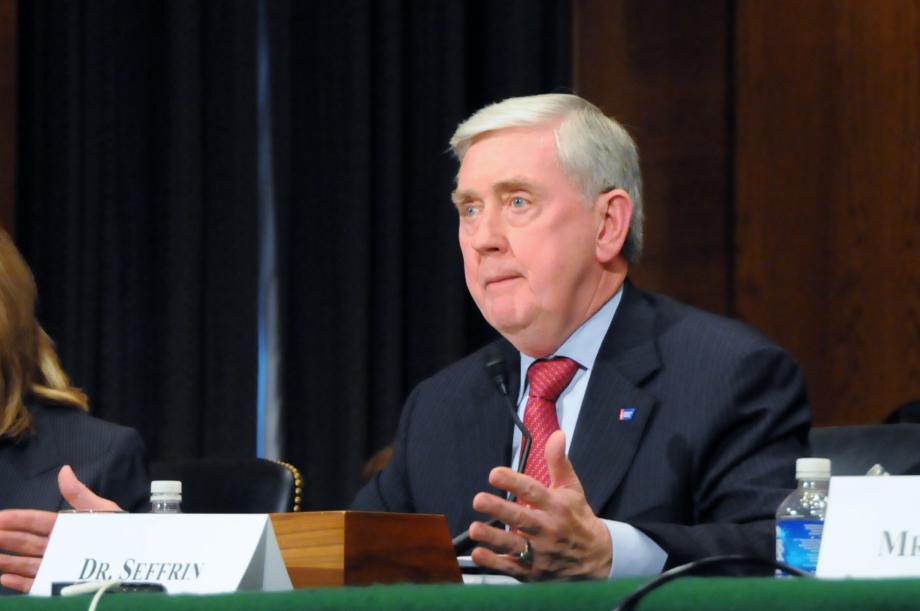
Michael Siegel
Matthew Wayne Johnson, Ph.D.

Veronique de Rugy, PhD

Cheryl K. Olson, Sc.D.
- Source: Comments on vaping and tobacco harm reduction from expert stakeholders
- Too few of my colleagues in public health research know people who smoke; they become abstractions to us. Existing smoking cessation aids have been available for many years; evidence suggests they don’t help most smokers. Let’s treat smokers like fellow human beings and provide them with a range of options they actually want and can live with (pun intended).
- Cheryl K. Olson, Sc.D. - Bio and Photo
- San Carlos, California
- Behavioral research consultant,
- Previously on Harvard Medical School psychiatry faculty
Michael F. Pesko, PhD
- Source: Comments on vaping and tobacco harm reduction from expert stakeholders
- The evidence base is growing that when you regulate e-cigarettes so they are harder to purchase and/or less appealing to use, there is more combustible tobacco product use across all populations. WHO should acknowledge that e-cigarettes (and snus) are safer products, and advocate regulating proportionate to risk, in order to improve population health.
- Michael F. Pesko, PhD - Bio and Photo
- Associate Professor
- Department of Economics
- Andrew Young School of Policy Studies
- Georgia State University
Daniel Wikler, Ph.D.
"In just today, we are going to lose 20 of our residents. Twenty individuals in Wisconsin are going to die prematurely of a disease directly caused by their smoking, on average, robbing them of 10 to 15 years of life." " Many adults don't want children exposed to secondhand smoke. Vaping is, without a question, less dangerous than cigarette smoking."
Thomas Brandon, PhD, United States

Earlier this year, the findings from a major clinical trial, published in the New England Journal of Medicine, showed that e-cigarettes were almost twice as effective as the nicotine patch for producing one year of smoking cessation. These findings added to those of other, smaller studies previously published.
“This could be a game-changer for lots of people,” says Thomas Brandon, Ph.D., director of Moffitt’s Tobacco Research and Intervention Program and chair of the Department of Health Outcomes and Behavior. “It means that for smokers who have not been able to quit by using the available medications, vaping might be worth a try. But it is important to completely switch from smoking to vaping to get the most health benefits.”
Thomas Brandon, PhD, is the Director of the Tobacco Research and Intervention Program and Chair of the Department of Health Outcomes and Behavior at Moffitt Cancer Center. He is also Professor of Psychology and Oncologic Sciences at the University of South Florida
Neal Benowitz
Sheila Vaklaria, PhD
Helen Redmond
Bill Godshall
Robert Sklaroff
Source of name - need to research for a quote
Stephen F. Gambescia
Source of name - need to research for a quote
Jason Osborne

Jeffrey Brandes
Stanton Glantz
“If you’re going to do one or the other, in terms of these respiratory effects you’re probably better off with an e-cigarette,” says study co-author Dr. Stanton Glantz, a professor of medicine at the University of California, San Francisco
Statements by Multiple Parties
2021: Reappraising Choice in Addiction: Novel Conceptualizations and Treatments for Tobacco Use Disorder
Suggestions to add to this page
A New International Commission of Experts Finds the Global Fight Against Smoking Has Stalled
CRUCIAL STEP IN TOBACCO HARM REDUCTION
Sec. Azar (need to find original source, might be a youtube video) VTA Graphic and Hawaii Graphic
expert reaction to WHO report on nicotine and tobacco products
Ending Cigarette Use By Adults In A Generation Is Possible
More names to research for positive statements
Jaron Hoani King
Comments on vaping and tobacco harm reduction from expert stakeholders
World No Tobacco Day: Here's why WHO’s approach to tobacco cessation needs an overhaul
The Truth Initiative, too, once embraced harm reduction. Its former board chairman, Tom Miller, Iowa’s long-serving attorney general, still argues that e-cigarettes are a “means to saving millions of lives.” Cheryl Healton, its former CEO, and David Abrams, formerly executive director of the Schroeder National Institute of Tobacco Research and Policy Studies, which is housed at the Truth Initiative, are harm-reduction advocates. So is Steven Schroeder, for whom the institute is named. Found here
Bill G.
Neil B.
Kellie Ann Forbes BScN Here
PROFESSOR HEINO STÖVER and here
Dr. Derek Yach
- “We’ve been very clear that we support provisions that children should never vape or smoke. However, our main objective is to help adult smokers quit by making cessation aids accessible and to support adult smokers switching to approved harm reduction products. These include snus, e-cigarettes, heated-tobacco products and nicotine pouches,” says Yach. “In the long term, tackling cessation together with harm reduction is the only way to bring smoking rates down relatively soon. If today’s adult smokers quit or switch, even into their fifties or sixties, they will see improvements in their quality of life.”
